


Execution Model
The conceptual lifecycle that governs every enterprise action
Five-Stage Lifecycle
Every enterprise action flows through a structured lifecycle. From initial intent to final evidence, each stage ensures governance, accountability, and trust.
This is not implementation detail. This is the conceptual model that defines how execution works.

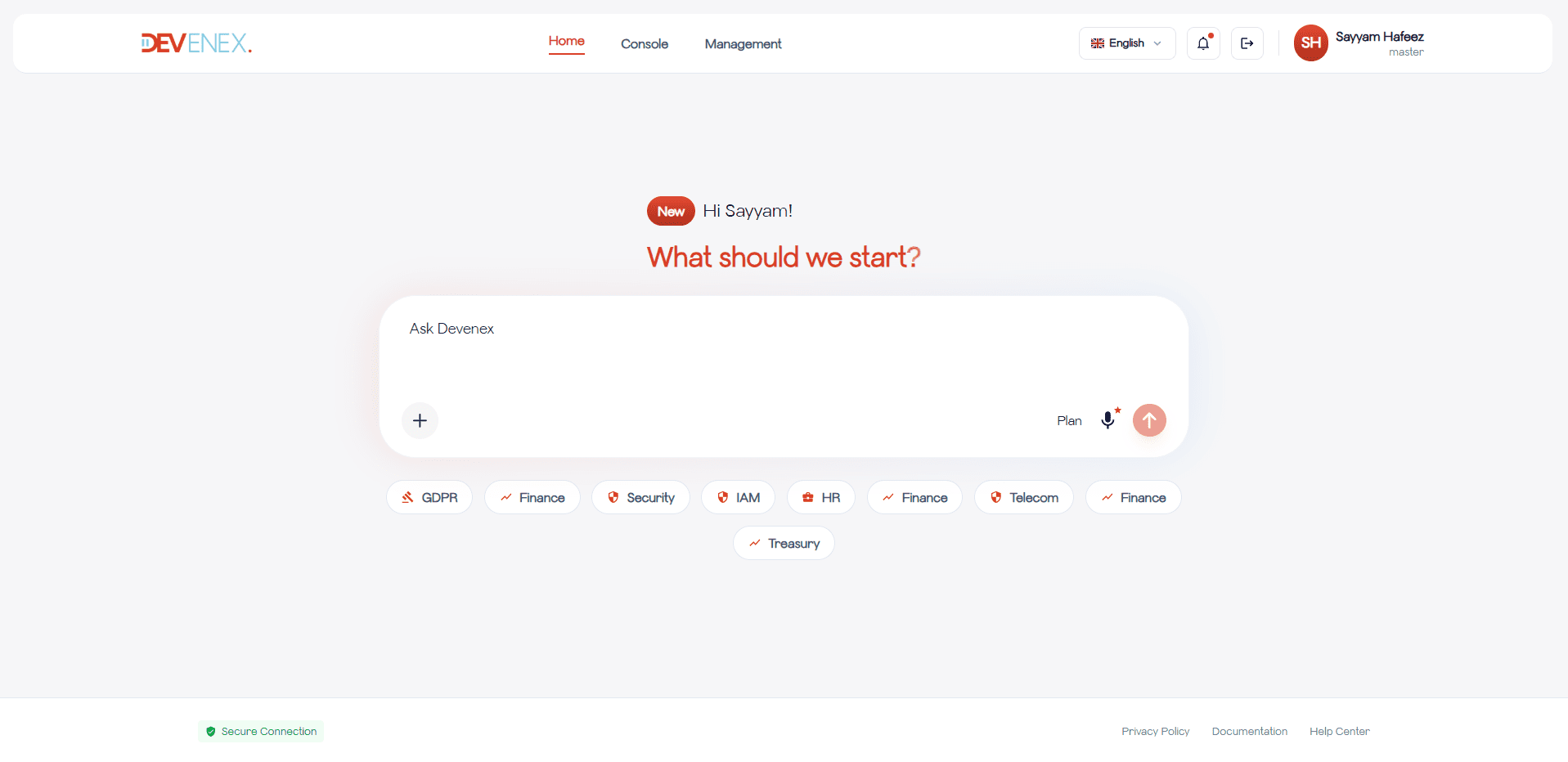
Intent
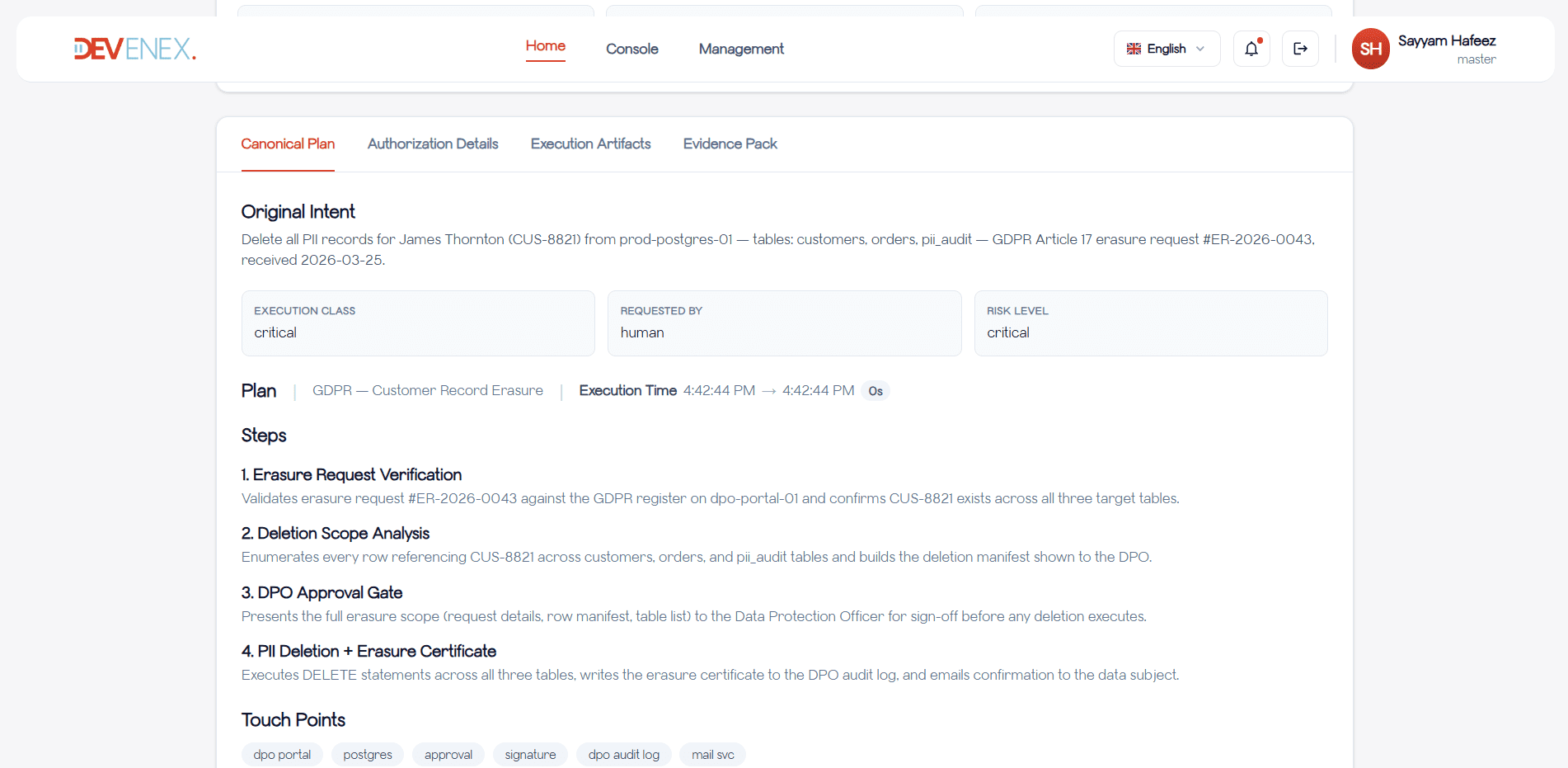
The initial phase where the desired outcome or goal is defined and captured. This involves understanding user needs and translating them into actionable objectives.
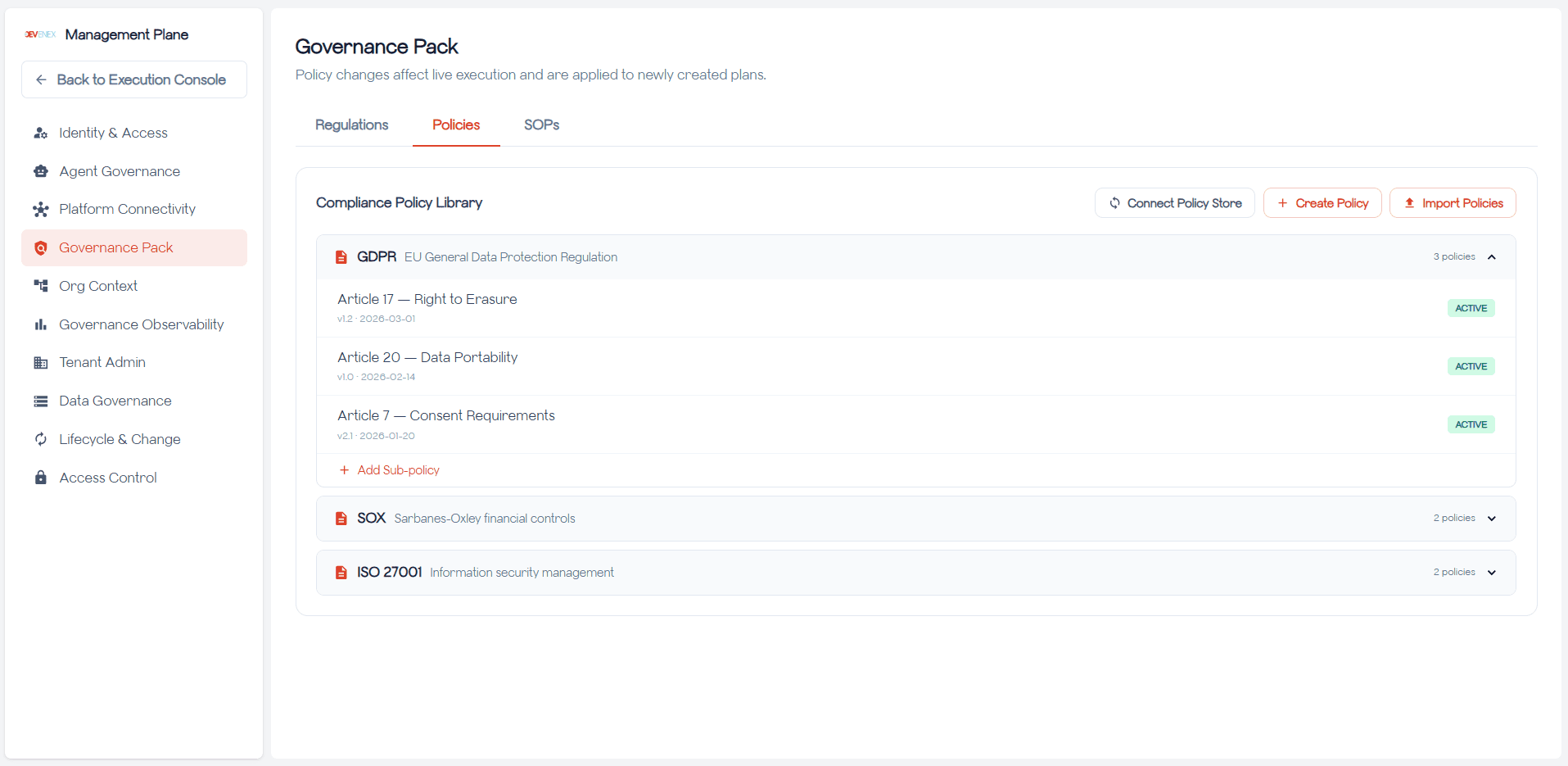
Policy
In this stage, the rules, constraints, and conditions governing the execution of the intent are established. Policies ensure compliance, security, and operational standards.
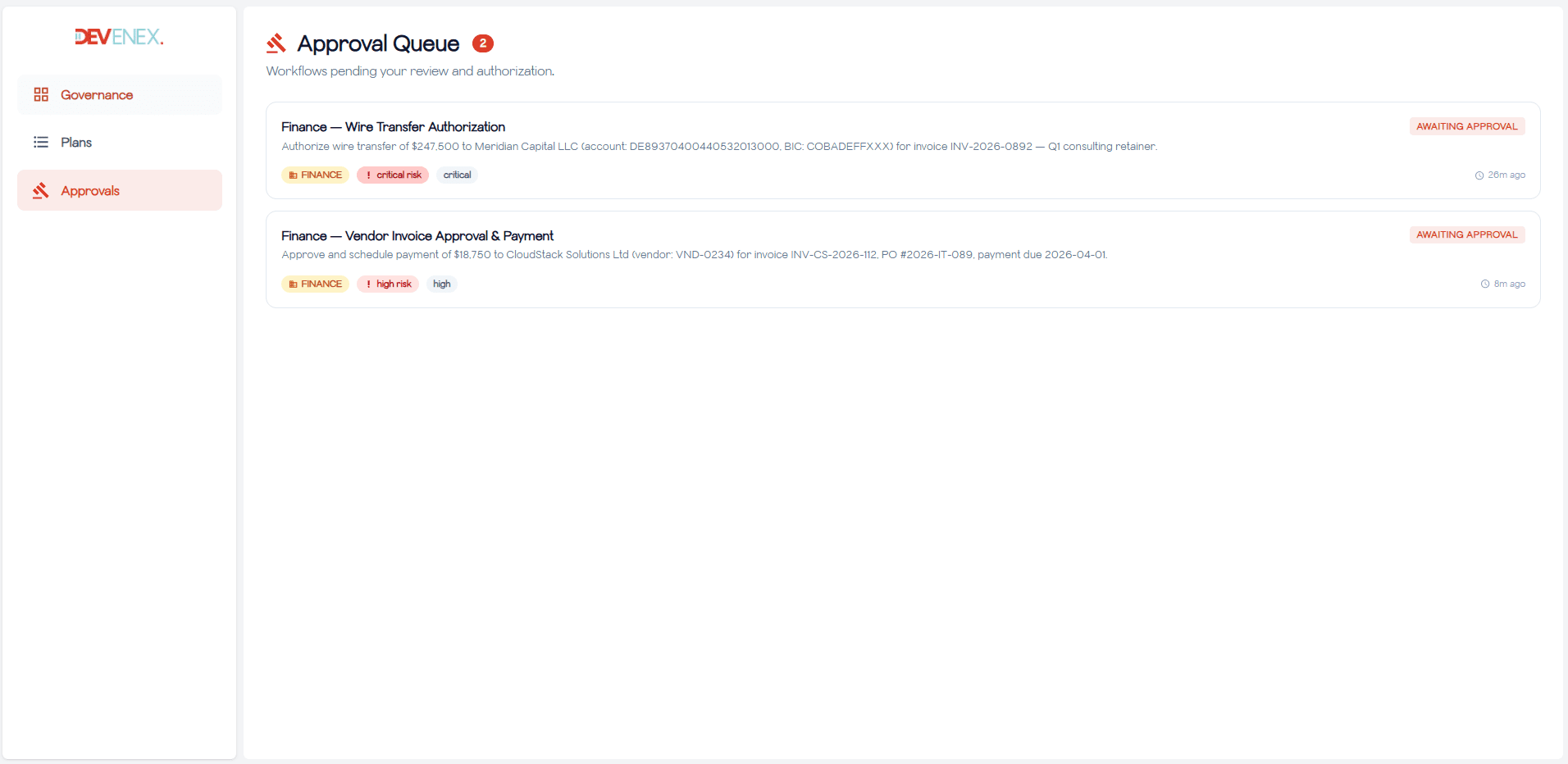
Approval
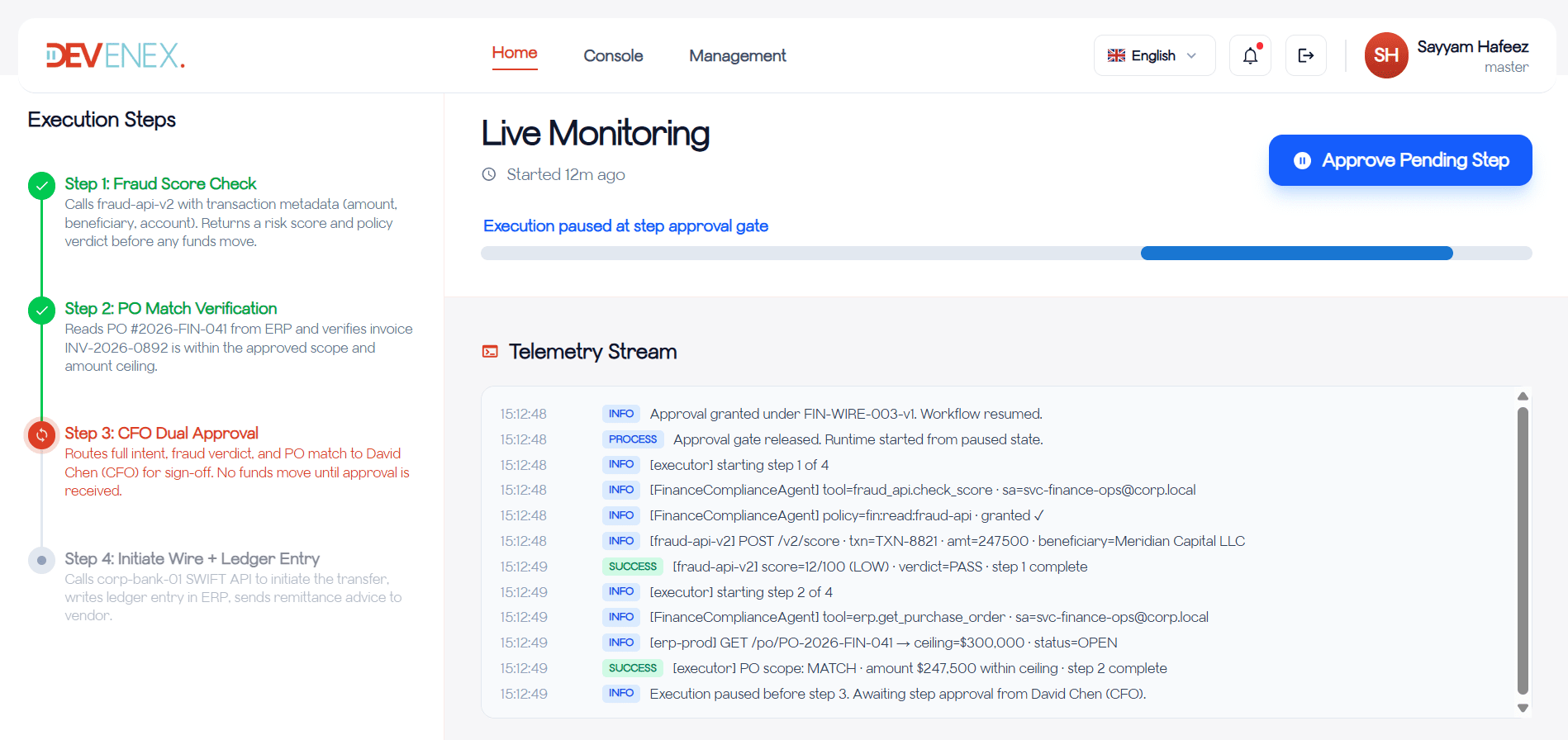
Before execution, critical actions or changes often require formal approval from relevant stakeholders. This stage ensures oversight and adherence to governance processes.
Execution
The actual implementation of the intent, guided by the defined policies and approvals. This is where the system performs the necessary actions to achieve the desired state.
Evidence
The final stage involves collecting and presenting verifiable proof that the intent was successfully executed according to policies and approvals. This includes logs, reports, and audit trails.
Governed Agent Execution: The unit of accountable AI operation.
Every enterprise action flows through a structured lifecycle. From initial intent to final evidence, each stage ensures governance, accountability, and trust.
This is not implementation detail. This is the conceptual model that defines how execution works.
Every action must pass through all five stages. No stage can be bypassed.
Each stage creates an immutable record. Execution becomes provable.
This is how enterprises maintain trust in an AI-driven world. Safe AI Enablement.
Ready to Govern Your
AI Execution?
Join the world’s most innovative enterprises in building a safe, accountable, and observable future for AI-driven operations.